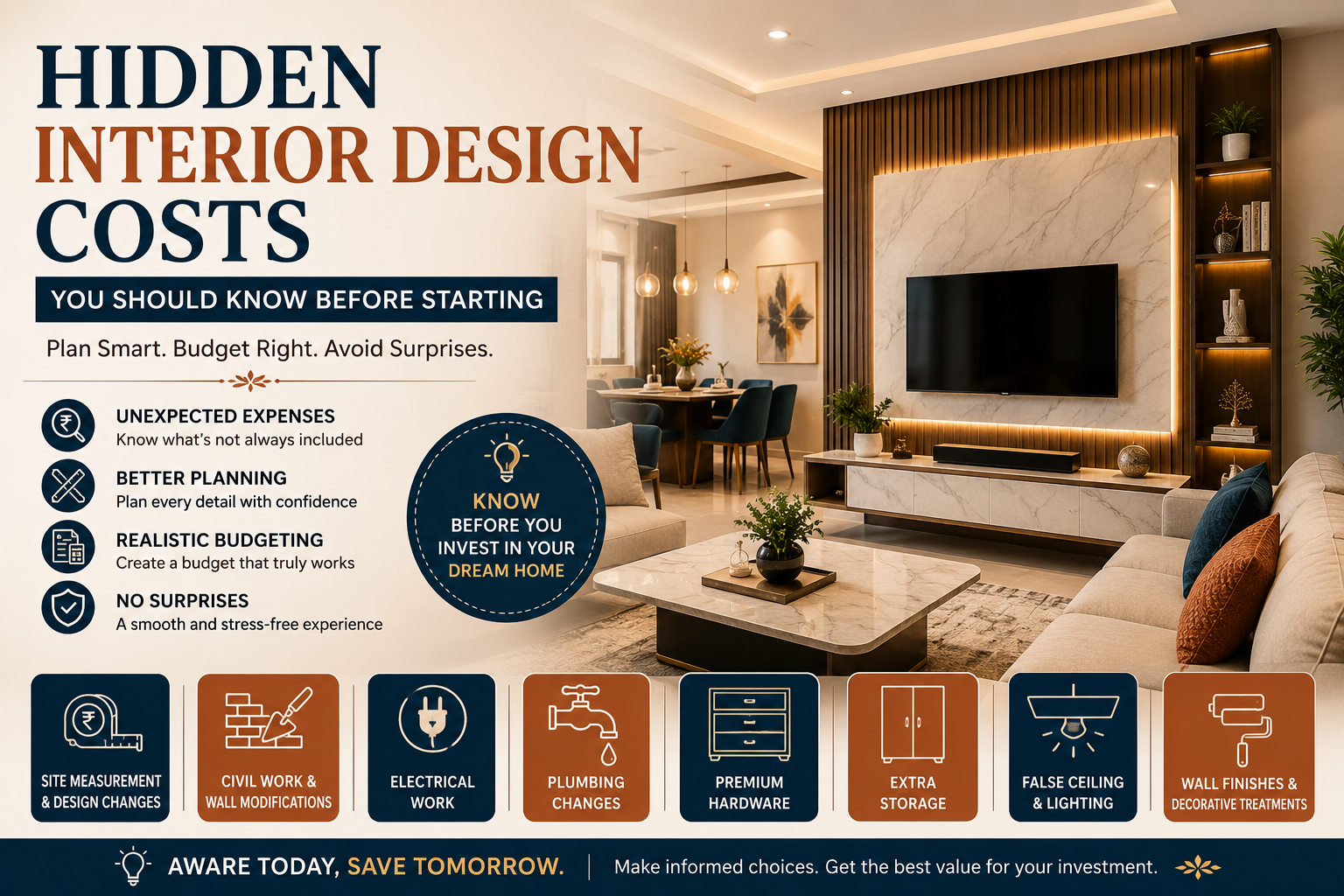
Planning a home interior project is exciting. You start imagining a beautiful living room, a stylish kitchen, comfortable bedrooms, elegant lighting, and furniture that fits perfectly. However, once the project begins, homeowners sometimes discover costs that weren’t obvious in the initial budget.
These unexpected expenses don’t necessarily mean your interior designer is overcharging you. Often, they come from changes in requirements, site conditions, additional work, upgrades, or items that weren’t included in the original quotation.
Therefore, understanding hidden interior design costs before starting your project can help you create a realistic budget and avoid unpleasant surprises.
Whether you’re designing a 2BHK apartment, 3BHK home, villa, or premium residence, here’s what you should look out for.
1. Site Measurement and Design Changes
The first quotation may be based on initial measurements or an early discussion.
However, once the designer takes detailed measurements, the actual requirements may change.
For example:
- A wall may have an unexpected column.
- Electrical points may need relocation.
- A window may affect cabinet placement.
- Plumbing positions may limit the kitchen layout.
- Uneven walls may require additional work.
As a result, the final design may cost more than the initial estimate.
Tip: Ask whether site measurement, design development, and revisions are included in your package.
2. Civil Work and Wall Modifications
Interior design isn’t limited to furniture and décor.
Depending on the project, you may need additional civil work such as:
- Wall demolition
- New partitions
- Flooring changes
- Plastering
- False walls
- Ceiling modifications
- Tile replacement
- Door modifications
These costs can add up quickly.
Therefore, before approving the design, ask your designer to identify all expected civil work and include it in the estimate wherever possible.
3. Electrical Work
Electrical modifications are another commonly overlooked expense.
Your original home may not have electrical points where your new furniture requires them.
You might need additional points for:
- TV units
- Bedside lights
- Pendant lights
- Decorative lighting
- Kitchen appliances
- Study desks
- Smart devices
- Charging points
Furthermore, premium lighting designs may require additional wiring, drivers, switches, dimmers, or control systems.
So, don’t budget only for the light fixtures. Consider the complete electrical installation.
4. Plumbing Changes in the Kitchen
A new modular kitchen may look perfect in a 3D design, but the actual site conditions can affect the final cost.
If you change the location of:
- Sink
- Dishwasher
- Water purifier
- Washing machine
- Drainage points
you may need additional plumbing work.
This is particularly important when you’re changing the kitchen layout significantly.
Before finalizing the design, ask whether the quotation includes plumbing modifications or only the kitchen cabinets.
5. Premium Hardware
Cabinet prices don’t always include premium hardware.
For example, upgrading from basic storage to:
- Soft-close drawers
- Tandem boxes
- Corner mechanisms
- Tall pantry units
- Lift-up shutters
- Magic corners
- Pull-out baskets
can increase the overall kitchen budget.
These features can certainly improve convenience. However, you should understand their cost before selecting them.
A good approach is to prioritize the hardware you will use most frequently.
6. Extra Storage
Storage is one of the biggest areas where budgets can increase.
Initially, you might plan a simple wardrobe. Later, you may decide to add:
- Loft storage
- Full-height wardrobes
- Shoe cabinets
- Display units
- Study storage
- Crockery cabinets
- Utility cabinets
- Hidden storage
Each addition uses more material, hardware, and labour.
Therefore, decide your storage requirements early instead of adding cabinets one by one during execution.
7. False Ceiling and Lighting
A simple ceiling design and an elaborate ceiling design can have very different costs.
Your budget may increase because of:
- Additional gypsum work
- Cove lighting
- Spotlights
- Profile lights
- Pendant fixtures
- Decorative fixtures
- Electrical wiring
- Special finishes
Moreover, premium lighting fixtures can significantly affect the final budget.
Instead of selecting lights only for their appearance, think about where you actually need ambient, task, and accent lighting.
8. Wall Finishes and Decorative Treatments
Paint may be included in your basic interior budget, while decorative finishes may cost extra.
These can include:
- Wallpaper
- Veneer panels
- Fluted panels
- Textured paint
- Decorative mouldings
- Wall panelling
- Stone finishes
- Designer laminates
A single feature wall may not seem expensive initially. However, multiple feature walls across several rooms can substantially increase the project cost.
So, use statement finishes strategically.
9. Flooring Upgrades
If you’re satisfied with your existing flooring, you may not need to replace it.
However, homeowners sometimes decide to upgrade flooring after seeing the proposed interior design.
Possible additional expenses include:
- New tiles
- Wooden flooring
- Vinyl flooring
- Stone
- Tile removal
- Surface preparation
- Installation
- Skirting
Therefore, decide early whether flooring forms part of your renovation.
10. Doors, Handles and Accessories
Small details can quietly increase your interior budget.
For example:
- Designer door handles
- Soft-close door systems
- New internal doors
- Main-door upgrades
- Door cladding
- Locks
- Hardware
- Mirrors
- Curtain rods
Each individual item may seem inexpensive. However, several small upgrades together can create a noticeable difference in your final bill.
11. Appliances Are Often Separate
A modular kitchen quotation may cover the cabinets but not necessarily the appliances.
You may still need to purchase:
- Hob
- Chimney
- Oven
- Microwave
- Refrigerator
- Dishwasher
- Water purifier
Similarly, bedroom or living room designs may include provisions for appliances without including the appliances themselves.
Always ask:
“Which products are included in this quotation, and which do I need to purchase separately?”
This simple question can prevent confusion later.
12. Curtains and Blinds
Window treatments are another cost homeowners sometimes forget.
Depending on the design, you may need:
- Curtains
- Blinds
- Curtain rods
- Tracks
- Motorized systems
- Blackout curtains
- Sheer curtains
Large villas and homes with multiple windows can have particularly high window-treatment costs.
Therefore, include them in your overall interior budget if you want a complete finished look.
13. Furniture Beyond the Basic Package
Some interior packages include only built-in furniture.
However, your completed home may also require loose furniture such as:
- Sofa
- Dining table
- Dining chairs
- Coffee table
- Side tables
- Accent chairs
- Beds
- Study chairs
If these aren’t part of your interior package, you’ll need to budget for them separately.
14. Décor and Styling
A room can look very different once styling is complete.
You may want:
- Artwork
- Mirrors
- Rugs
- Cushions
- Vases
- Plants
- Decorative lighting
- Accessories
- Curtains
These aren’t always included in an interior design quotation.
Therefore, if you’re aiming for a fully styled home, create a separate décor budget.
15. Delivery and Transportation
Depending on the location and project arrangement, transportation may be charged separately.
This can include:
- Material transportation
- Furniture delivery
- Multiple deliveries
- Loading and unloading
- Difficult site access
- Long-distance transportation
Ask your designer whether delivery and transportation are already included.
16. Installation and Labour Charges
Never assume that manufacturing automatically includes installation.
Ask whether the quotation covers:
- Furniture installation
- Electrical installation
- Light installation
- Hardware installation
- Curtain installation
- Wall panel installation
- Final adjustments
A detailed quotation should make these charges clear.
17. Apartment Society Charges
If you’re renovating an apartment, your building management may have specific rules.
Depending on the society, you may encounter charges related to:
- Renovation permissions
- Material movement
- Lift usage
- Working hours
- Debris removal
- Security deposits
- Parking or loading arrangements
These charges vary from one apartment community to another.
Therefore, check with your association before starting major interior work.
18. Debris Removal and Disposal
Renovation creates waste.
Old cabinets, tiles, flooring, packaging materials, and construction debris may need to be removed from the property.
Sometimes debris removal is included in the project.
Sometimes it isn’t.
Ask about this before work begins.
Otherwise, you may discover an unexpected expense toward the end of the project.
19. GST and Other Taxes
Always check whether your quotation includes applicable taxes.
A quote that initially looks affordable may become significantly higher once taxes are added.
Therefore, look for a clear breakdown:
Base Cost + Applicable Taxes = Final Project Cost
Don’t hesitate to ask your designer to explain the final payable amount.
20. Design Upgrades During the Project
This is perhaps one of the most common reasons budgets increase.
Once work begins, you may see the actual materials and start thinking:
“Maybe I should upgrade this.”
Then one upgrade becomes another.
For example:
- Better laminate
- Premium handles
- More storage
- Higher-quality lighting
- Designer wallpaper
- Upgraded countertop
- Additional furniture
None of these decisions may seem significant individually. However, together they can push the budget considerably higher.
The solution?
Set an upgrade budget before the project starts.
That way, you can enjoy some flexibility without losing control of your finances.
How to Avoid Unexpected Interior Design Costs
The good news is that most budget surprises can be reduced with proper planning.
1. Get a Detailed Quotation
Ask for an itemized quotation instead of a single lump-sum figure.
2. Clarify What’s Included
Understand exactly what the package covers.
3. Discuss Materials Early
Confirm the material, finish, thickness, hardware, and brand/specification wherever relevant.
4. Freeze the Design Before Production
Frequent changes after manufacturing begins can increase costs and delay the project.
5. Keep a Contingency Budget
Even with careful planning, unexpected site conditions can occur.
Keeping around 10–15% of your planned budget as a contingency can provide a useful financial cushion, depending on the scope and condition of the property.
6. Ask About Additional Charges
Discuss transportation, installation, civil work, electrical work, plumbing, taxes, and debris removal upfront.
Questions to Ask Your Interior Designer Before Signing
Before finalizing your project, ask these questions:
Is the quotation itemized?
Are taxes included?
Is installation included?
Are civil, electrical, and plumbing works included?
Which hardware specifications are included?
Are appliances included?
Are curtains and décor included?
Are transportation and delivery included?
What happens if I change the design after approval?
What warranty do you provide?
Is there an additional charge for modifications during execution?
Getting clear answers to these questions can make the entire project more transparent.
How LUNORA Space Designs Approaches Interior Projects
At LUNORA Space Designs, thoughtful planning starts before execution. The design process focuses on understanding the client’s requirements, studying the available space, developing the concept, refining material selections, and preparing the project for execution.
For homeowners planning interiors in Hyderabad, this structured approach can make it easier to understand the scope of work and make informed decisions about materials, finishes, furniture, lighting, and storage.
Whether you’re planning a 2BHK apartment, 3BHK home, villa, modular kitchen, or custom furniture, discussing the complete scope early can help you manage expectations and budget more effectively.
Final Thoughts
Interior design is a significant investment, so knowing the potential hidden costs before you begin can save you both money and stress.
The biggest lesson is simple: don’t judge an interior design quotation by its headline price alone.
Look at what the quotation includes, what it excludes, which materials and hardware it specifies, and what additional work your home may require.
Most importantly, communicate openly with your designer.
When you establish a realistic budget, finalize the scope carefully, leave room for unexpected site requirements, and avoid unnecessary last-minute upgrades, your interior project becomes much easier to manage.
A well-planned interior isn’t just about creating a beautiful home. It’s also about creating a clear plan for how that home will come together—without unpleasant financial surprises along the way.
Leave a Reply