Tag: custom furniture

  • How to Find the Best Interior Designers in Hyderabad

    How to Find the Best Interior Designers in Hyderabad

    Choosing the right interior designer for your home is an important decision. Your choice can influence not only how your home looks, but also how comfortable, practical, organized, and enjoyable it is to live in for years to come.

    With so many interior designers in Hyderabad, it can be difficult to know where to begin. A quick search can give you dozens of portfolios, advertisements, and attractive project photographs. But a beautiful photograph alone does not tell you whether a designer is the right fit for your home.

    The right designer should understand your lifestyle, space, budget, preferences, and expectations—and turn those requirements into a practical design.

    Here is a simple guide to help you choose the right interior designer in Hyderabad.

    1. Start With Your Own Requirements

    Before contacting designers, spend some time understanding what you actually need.

    You do not have to know every technical detail. A simple list is enough.

    Think about:

    • The size and type of your home
    • Number of bedrooms
    • Kitchen requirements
    • Storage needs
    • Furniture requirements
    • Home office needs
    • Preferred design style
    • Approximate budget
    • Expected timeline

    For example, you might want a modern living room, a highly functional modular kitchen, large wardrobes, and a dedicated work-from-home area.

    Knowing these priorities will make conversations with designers much more productive.

    2. Look at Their Portfolio

    A designer’s portfolio is one of the first things you should review.

    But don’t simply ask whether the projects look beautiful.

    Look for projects that are similar to your own.

    If you own an apartment, look for apartment projects. If you are planning a luxury villa, look for similar residential work.

    Pay attention to:

    • Layouts
    • Furniture choices
    • Storage solutions
    • Material combinations
    • Lighting
    • Kitchens
    • Bedrooms
    • Overall finishing

    A portfolio can give you an idea of the designer’s design language and whether it matches your expectations.

    3. Check Whether They Understand Your Style

    Every homeowner has different preferences.

    Some people like minimal interiors. Others prefer warm luxury, contemporary designs, natural materials, or more decorative spaces.

    The right designer should be able to understand your preferences instead of forcing you into a fixed style.

    During your first discussion, share a few reference images and explain what you like about them.

    A good designer should be able to identify the common elements in your references and adapt them to your home.

    4. Ask About Their Design Process

    A professional interior project should have a clear process.

    Ask what happens after the initial consultation.

    For example:

    1. Requirement discussion
    2. Space planning
    3. Concept development
    4. Material selection
    5. Design refinement
    6. Final detailing
    7. Execution

    LUNORA Space Designs follows a structured process beginning with discovery and briefing, followed by concept and design, refinement, and execution.

    Understanding the process before signing up can help you know what to expect at every stage.

    5. Don’t Choose a Designer Based Only on Price

    Budget is obviously important, but the cheapest quotation is not necessarily the best value.

    Two designers may quote different amounts because their proposals include different:

    • Materials
    • Hardware
    • Furniture
    • Design services
    • Customization
    • Execution support
    • Finishing details

    Instead of asking only, “Who is cheaper?”, ask:

    “What exactly am I getting for this price?”

    Compare the scope of work carefully before making a decision.

    6. Discuss Your Budget Honestly

    You do not need to hide your budget from an interior designer.

    In fact, sharing a realistic budget early can help the designer recommend appropriate materials, furniture, finishes, and solutions.

    For example, you may have a fixed budget but want to create a premium-looking living room.

    A designer can then help you decide where to invest more and where practical alternatives can be used.

    A good interior project is not necessarily one where the most money is spent.

    It is one where the available budget is used intelligently.

    7. Evaluate Their Space-Planning Skills

    A beautiful interior can still be uncomfortable if the layout is poorly planned.

    Space planning is particularly important in Hyderabad apartments where every square foot may need to serve a purpose.

    Ask how the designer approaches:

    • Furniture placement
    • Movement
    • Storage
    • Room proportions
    • Functional zones
    • Lighting
    • Electrical points

    LUNORA’s space-planning service focuses on layout studies, furniture size and placement, circulation, storage optimization, lighting positions, functional zones, and practical use of available space.

    Good space planning can make a home feel more spacious without changing its actual size.

    8. Ask About Storage

    Storage is often underestimated during the initial design stage.

    Think about what your family needs to store now—and what you may need to store in the future.

    A good interior designer can integrate storage through:

    • Full-height wardrobes
    • Modular kitchen cabinets
    • Built-in storage
    • TV units
    • Storage beds
    • Custom cabinets
    • Utility storage

    The goal is to create enough storage without making the home feel visually crowded.

    9. Look at Their Kitchen Designs

    If you are designing a complete home, pay particular attention to the designer’s kitchen projects.

    The kitchen needs to balance appearance and functionality.

    Ask whether the designer considers:

    • Cooking habits
    • Appliance placement
    • Counter space
    • Cabinet organization
    • Pantry requirements
    • Corner storage
    • Lighting
    • Ease of movement

    LUNORA’s modular kitchen service covers layout planning, cabinet and drawer design, countertop guidance, appliance placement, backsplash and colour selection, lighting suggestions, and storage optimization.

    A kitchen should be designed around the person using it—not just around how it looks in a photograph.

    10. Understand Their Approach to Custom Furniture

    Standard furniture can work perfectly well in many homes. However, some spaces require customized solutions.

    Custom furniture can be particularly useful for:

    • Wardrobes
    • TV units
    • Study desks
    • Storage cabinets
    • Display units
    • Beds
    • Built-in seating

    Ask the designer when customization is actually necessary.

    You do not need to customize everything.

    The best approach is to use custom furniture where it solves a specific space, storage, or functionality problem.

    LUNORA’s custom furniture service includes size and layout customization, material and finish selection, storage integration, comfort planning, and matching furniture with the overall interior theme.

    11. Ask About Materials and Finishes

    Materials can significantly affect both the appearance and longevity of your interiors.

    Ask your designer about the materials being recommended for:

    • Kitchen cabinets
    • Wardrobes
    • Countertops
    • Wall panels
    • Furniture
    • Flooring
    • Hardware
    • Lighting

    Don’t hesitate to ask why a particular material is being recommended.

    You should understand its:

    • Durability
    • Maintenance
    • Appearance
    • Cost
    • Suitability for the room

    The right material is not always the most expensive material.

    12. Check How They Handle Communication

    Interior design is a collaborative process.

    You will probably need to approve layouts, materials, finishes, furniture, colours, and other details along the way.

    Therefore, communication matters.

    Before hiring a designer, understand:

    • Who will be your main point of contact?
    • How often will updates be provided?
    • How are design changes handled?
    • How are approvals taken?
    • How are concerns addressed?

    A designer who communicates clearly can make the overall experience much smoother.

    13. Ask About Execution Support

    Design and execution are closely connected.

    A beautiful design needs to be implemented correctly for the final result to match the concept.

    Ask whether the designer provides execution guidance or coordination and understand exactly what that involves.

    You should know:

    • Who coordinates vendors?
    • Who checks measurements?
    • Who handles material selection?
    • Who monitors finishing?
    • Who resolves execution-related issues?

    Clarifying these responsibilities early can prevent confusion later.

    14. Consider Long-Term Functionality

    Your home should not only look good when the project is completed.

    It should continue to work for you years later.

    Ask yourself:

    • Will there be enough storage?
    • Are the materials easy to maintain?
    • Is the furniture comfortable?
    • Can the space adapt to changing needs?
    • Is the kitchen practical?
    • Is the lighting suitable for everyday use?

    A professional designer should think beyond the final photographs and consider how you will actually live in the space.

    15. Meet the Designer Before Making a Decision

    If possible, have a proper consultation before finalizing your interior designer.

    Use the meeting to explain your requirements and ask questions.

    Pay attention to how the designer responds.

    Do they listen?

    Do they ask questions about your lifestyle?

    Do they understand your budget?

    Do they explain their recommendations?

    Do they try to understand your priorities?

    These interactions can tell you a lot more than a portfolio alone.

    Red Flags to Watch Out For

    While searching for interior designers in Hyderabad, be cautious if:

    • The quotation is unclear.
    • The scope of work is not documented.
    • The designer refuses to discuss materials.
    • Everything is presented as an additional cost.
    • There is no clear design process.
    • Communication is difficult from the beginning.
    • You are pressured to make a quick decision.
    • The designer focuses only on aesthetics and ignores functionality.

    A professional relationship should feel transparent from the beginning.

    What Makes a Good Interior Designer?

    The best interior designer is not necessarily the one with the most expensive portfolio.

    A good designer should be able to balance:

    Aesthetics + Functionality + Space Planning + Budget + Materials + Personalization

    They should understand that your home is not a showroom.

    It is where you wake up, cook, work, relax, spend time with family, entertain guests, and create memories.

    That is why the design needs to work in real life.

    Why LUNORA Space Designs?

    LUNORA Space Designs is a luxury interior design studio in Hyderabad focused on combining modern aesthetics, premium craftsmanship, thoughtful functionality, and timeless design.

    The studio offers:

    • Residential Interiors
    • Commercial Spaces
    • Modular Kitchens
    • Space Planning
    • Custom Furniture

    Its residential interior service includes complete home interior planning, room-wise layouts, furniture placement, colour and material selection, lighting concepts, modular storage, custom furniture suggestions, premium finish recommendations, and execution guidance.

    The approach is centered around understanding the client and creating interiors around their lifestyle rather than relying on a standard template.

    Final Thoughts

    Finding the best interior designers in Hyderabad is not simply about finding the designer with the most impressive photographs or the lowest quotation.

    It is about finding someone who understands your space, listens to your requirements, respects your budget, communicates clearly, and can turn your ideas into a practical design.

    Take your time. Compare portfolios, understand the scope, ask questions, discuss materials, and make sure you are comfortable with the design process before committing.

    The right interior designer should do more than make your home look beautiful.

    They should help you create a home that feels right for the way you live.
  • Custom Furniture for Hyderabad Homes: When Is It Worth the Investment?

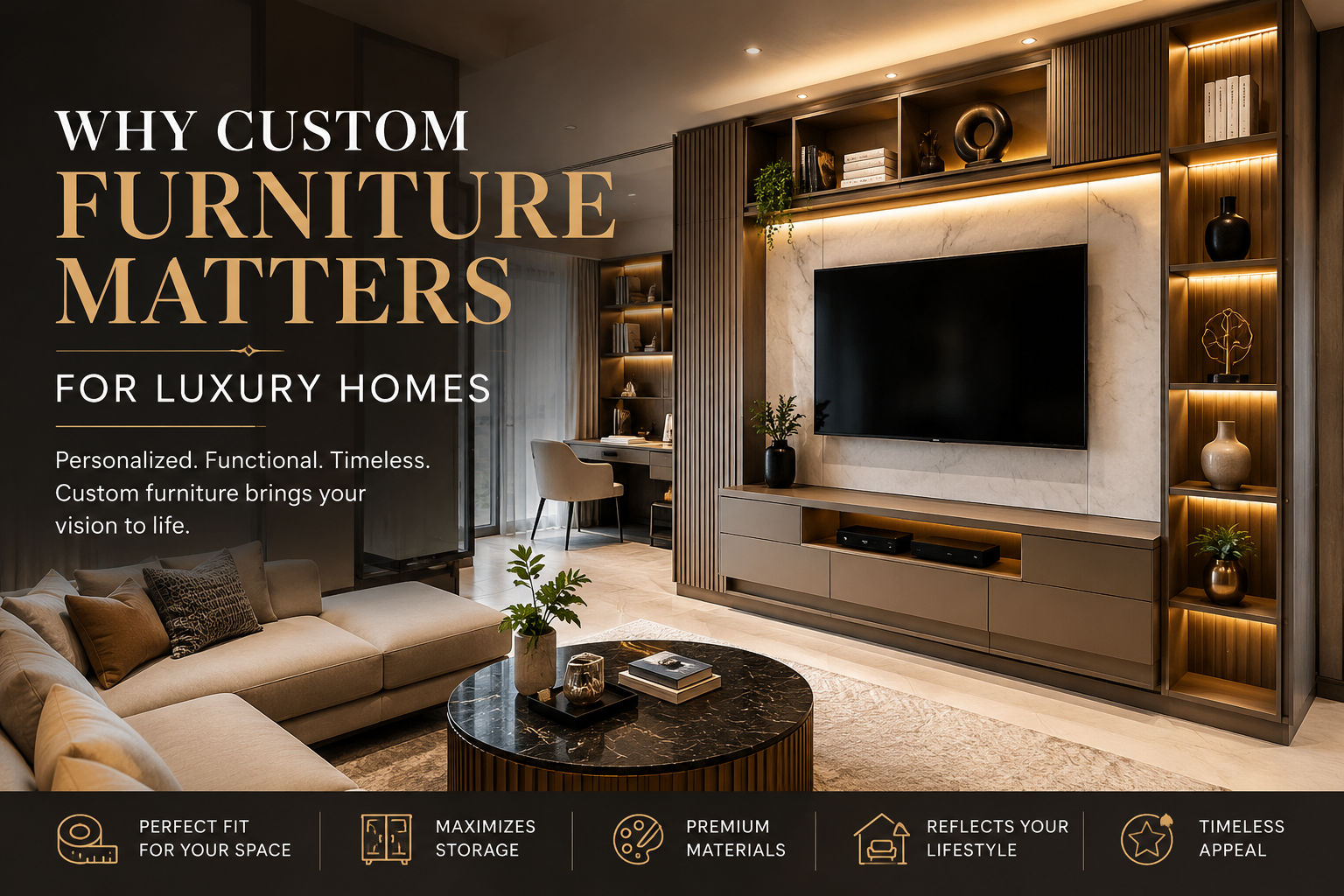
    Custom Furniture for Hyderabad Homes: When Is It Worth the Investment?

    Furniture plays a major role in how a home looks, feels, and functions. While ready-made furniture offers convenience, it does not always fit the exact dimensions, layout, or style of your home. That is where custom furniture can make a real difference.

    For homeowners in Hyderabad, custom furniture is becoming an increasingly popular choice, especially for apartments, villas, and premium homes where every inch of space matters.

    But is it actually worth the investment?

    The answer depends on your home, lifestyle, budget, and expectations. In this guide, let’s look at when custom furniture makes sense, where it can save you space, and what you should consider before investing.

    What Is Custom Furniture?

    Custom furniture is designed and made specifically for your home rather than purchased as a standard, ready-made product.

    Instead of adjusting your room around the furniture, the furniture is designed around your room.

    For example, a custom furniture piece could be:

    • A wall-to-wall TV unit
    • A built-in wardrobe
    • A custom sofa
    • A study desk
    • A storage cabinet
    • A dining table
    • A bookshelf
    • A shoe cabinet
    • A window-side seating unit
    • A custom bed with storage
    • A home office workstation

    You can choose the dimensions, materials, finishes, colours, storage configuration, and overall design based on your requirements.

    Why Are Hyderabad Homeowners Choosing Custom Furniture?

    Hyderabad has a wide range of residential properties, from compact apartments to spacious villas. As a result, furniture requirements can vary significantly from one home to another.

    An apartment in Kondapur may have completely different space constraints compared with a villa in Jubilee Hills.

    Ready-made furniture comes in predetermined sizes. However, your home may have:

    • Uneven wall dimensions
    • Narrow passages
    • Structural columns
    • Windows at unusual heights
    • Limited storage
    • Small bedrooms
    • Sloping or awkward corners
    • Specific electrical points

    Custom furniture can address these limitations more effectively.

    Instead of leaving unusable gaps, you can design furniture to fit the available space properly.

    1. Custom Furniture Makes Better Use of Small Spaces

    This is one of the biggest reasons to consider custom furniture.

    Imagine a bedroom with a narrow wall. A standard wardrobe may leave a gap between the wardrobe and ceiling or between the wardrobe and side wall.

    That unused space eventually becomes a place where dust collects.

    With a custom wardrobe, you can use the available height and width more efficiently.

    Similarly, you can create:

    • Storage beneath beds
    • Full-height wardrobes
    • Built-in study desks
    • Corner cabinets
    • Window seating with storage
    • Floating storage units

    This is particularly useful for compact 2BHK and 3BHK apartments.

    2. It Gives You Complete Control Over Storage

    Ready-made furniture often provides a fixed number of shelves, drawers and compartments.

    But your storage needs may be different.

    For example, you may need:

    • More hanging space for clothes
    • Additional drawers for accessories
    • Dedicated shoe storage
    • Larger compartments for suitcases
    • Separate shelves for books
    • Hidden storage for documents
    • Space for appliances

    Custom furniture lets you decide how the interior is organised.

    The result isn’t just furniture that looks good. It becomes furniture that works for your lifestyle.

    3. You Can Match Your Interior Design

    One of the biggest advantages of custom furniture is visual consistency.

    If your home follows a modern, minimalist design, you can create furniture with clean lines and subtle finishes.

    If you prefer a warm contemporary look, you can introduce wood textures, soft colours and carefully selected hardware.

    The furniture can coordinate with:

    • Flooring
    • Wall colours
    • Lighting
    • False ceiling
    • Curtains
    • Modular kitchen
    • Doors
    • Decorative elements

    This creates a more cohesive interior instead of making each room look like a collection of unrelated furniture pieces.

    4. Custom Furniture Works Well in Luxury Interiors

    Luxury interiors aren’t necessarily about filling a home with expensive objects.

    Instead, they often depend on proportion, detailing, material quality and thoughtful design.

    Custom furniture can support this approach.

    A built-in TV unit can hide wires and equipment. A custom wardrobe can integrate lighting and storage. A bespoke dining table can be designed to suit the dimensions of the dining area.

    These details may appear small individually, but together they can make the interior feel much more refined.

    5. It Can Solve Awkward Layout Problems

    Not every room has a perfect rectangular layout.

    You may have a pillar in the middle of a wall or a corner that is difficult to furnish.

    Instead of treating these elements as problems, custom furniture can incorporate them into the design.

    For example:

    Structural column:
    Build storage around it.

    Narrow passage:
    Create a slim console or storage unit.

    Unused corner:
    Design a corner bookshelf or cabinet.

    Window area:
    Create a window seat with drawers underneath.

    Long empty wall:
    Combine storage, display and workspace into one unit.

    This approach helps turn difficult spaces into useful ones.

    6. You Can Choose Materials and Finishes

    Custom furniture also gives you greater control over the materials used.

    Depending on the application and budget, options may include:

    • Plywood
    • MDF
    • Veneer
    • Laminates
    • Solid wood
    • Glass
    • Metal
    • Acrylic
    • Fluted panels
    • Natural or engineered stone

    However, the most expensive material isn’t automatically the best choice.

    Different areas of the home have different requirements. A professional interior designer can help you select materials based on durability, maintenance, appearance and budget.

    When Is Custom Furniture Actually Worth the Investment?

    Custom furniture can be valuable, but that doesn’t mean every piece in your home needs to be custom-made.

    Here are some situations where it makes the most sense.

    When You Have Limited Space

    If every square foot matters, custom furniture can help maximise the available area.

    When You Have Unusual Room Dimensions

    Odd corners, narrow walls and structural elements can make ready-made furniture difficult to use.

    When Storage Is a Priority

    If your family needs significantly more storage than standard furniture provides, custom solutions can be worthwhile.

    When You Want a Consistent Interior

    Custom furniture can help maintain the same design language throughout your home.

    When You Are Designing a Premium Home

    For luxury apartments and villas, bespoke furniture can add a more personalised and refined appearance.

    When You Plan to Stay in the Home for Years

    If you’re creating a long-term home rather than furnishing a temporary rental, investing in furniture that fits your lifestyle can make more sense.

    When Ready-Made Furniture May Be Better

    Custom furniture isn’t always the right answer.

    Ready-made furniture can be a better option when:

    • You have a limited budget
    • You need furniture quickly
    • You are renting the property
    • Your space doesn’t have unusual dimensions
    • You expect to move soon
    • You want the flexibility to replace furniture easily

    For example, there may be little reason to commission a custom side table when a standard product already fits the room perfectly.

    The smartest approach is often a combination of both.

    Custom vs Ready-Made Furniture: A Quick Comparison

    FactorCustom FurnitureReady-Made Furniture
    FitDesigned for your spaceStandard dimensions
    StorageFully configurablePredetermined
    DesignHighly personalisedLimited choices
    Material optionsWider flexibilityDepends on product
    Lead timeUsually longerUsually faster
    Initial costOften higherOften lower
    Space utilisationExcellentDepends on dimensions
    PersonalisationHighLimited
    ReplacementMore involvedEasier

    The right choice depends on what matters most to you.

    How Much Should You Spend on Custom Furniture?

    There is no single price that applies to every custom furniture project.

    The final cost depends on factors such as:

    • Furniture dimensions
    • Material selection
    • Hardware
    • Finish
    • Internal storage configuration
    • Design complexity
    • Quantity
    • Installation
    • Brand of accessories
    • Customisation requirements

    Instead of comparing only the total price, ask for a detailed quotation.

    Make sure you understand what is included in the cost, especially for built-in furniture.

    Don’t Compromise on Hardware

    Hardware may not be the most visible part of furniture, but it can have a major impact on everyday use.

    Think about:

    • Hinges
    • Drawer channels
    • Handles
    • Lift-up mechanisms
    • Soft-close systems
    • Sliding systems
    • Wardrobe accessories

    A beautifully designed wardrobe can become frustrating if the drawers don’t operate smoothly or the hinges wear out quickly.

    Therefore, discuss hardware specifications with your interior designer before finalising the furniture.

    Think About Maintenance

    Before choosing a finish, think about how the furniture will be used.

    A home with young children may need finishes that are easy to clean. A frequently used kitchen cabinet requires materials suitable for that environment. A display cabinet may have different requirements from a wardrobe.

    Ask:

    • Is the surface easy to clean?
    • Will it show fingerprints?
    • How does it handle everyday wear?
    • Is repair possible?
    • Can individual hardware components be replaced?

    Good custom furniture should look attractive while remaining practical.

    Don’t Design Furniture in Isolation

    One common mistake is designing furniture separately from the rest of the home.

    For example, a TV unit might look beautiful on its own but clash with the flooring and wall finish.

    Instead, consider the entire room.

    Your furniture should work with:

    • Wall treatments
    • Lighting
    • Flooring
    • Curtains
    • Ceiling design
    • Colour palette
    • Other furniture

    This is where professional home interior design in Hyderabad can add value. An experienced designer looks at the home as one connected environment rather than a collection of individual products.

    Questions to Ask Before Ordering Custom Furniture

    Before finalising your project, ask your designer or furniture manufacturer:

    1. What materials will be used?
    2. What thickness will the boards have?
    3. Which hardware brands and specifications are included?
    4. What finish will be applied?
    5. How will the furniture be installed?
    6. Is transportation included?
    7. What is the expected production timeline?
    8. Is there a warranty?
    9. How will repairs or service be handled?
    10. Does the quotation include all accessories and installation?

    Clear answers can help prevent misunderstandings later.

    The Role of an Interior Designer in Custom Furniture

    A good interior designer does more than select furniture styles.

    They consider how each piece fits into the overall home.

    The process can include:

    Understanding your needs → Measuring the space → Creating designs → Selecting materials → Finalising details → Manufacturing → Installation

    This structured approach can reduce design mistakes and help ensure that the furniture works with the rest of the interior.

    Final Thoughts

    So, is custom furniture worth the investment for Hyderabad homes?

    In many cases, yes—especially when you have limited space, specific storage requirements, unusual room dimensions or a strong preference for a cohesive interior.

    However, you don’t need to customise everything.

    Use custom furniture where it provides genuine value, and choose ready-made pieces where standard furniture already meets your needs. This balanced approach can help you create a beautiful and practical home without spending unnecessarily.

    At LUNORA Space Designs, custom furniture can be planned as part of the larger interior design process, allowing storage, functionality, materials and aesthetics to work together. Whether you’re designing an apartment or a spacious villa in Hyderabad, the goal is simple: create furniture that fits not only your home, but also the way you live.

    Planning custom furniture for your Hyderabad home? Start with your space, lifestyle and storage needs, then build the design around them.

  • Hidden Interior Design Costs Homeowners Should Know Before Starting

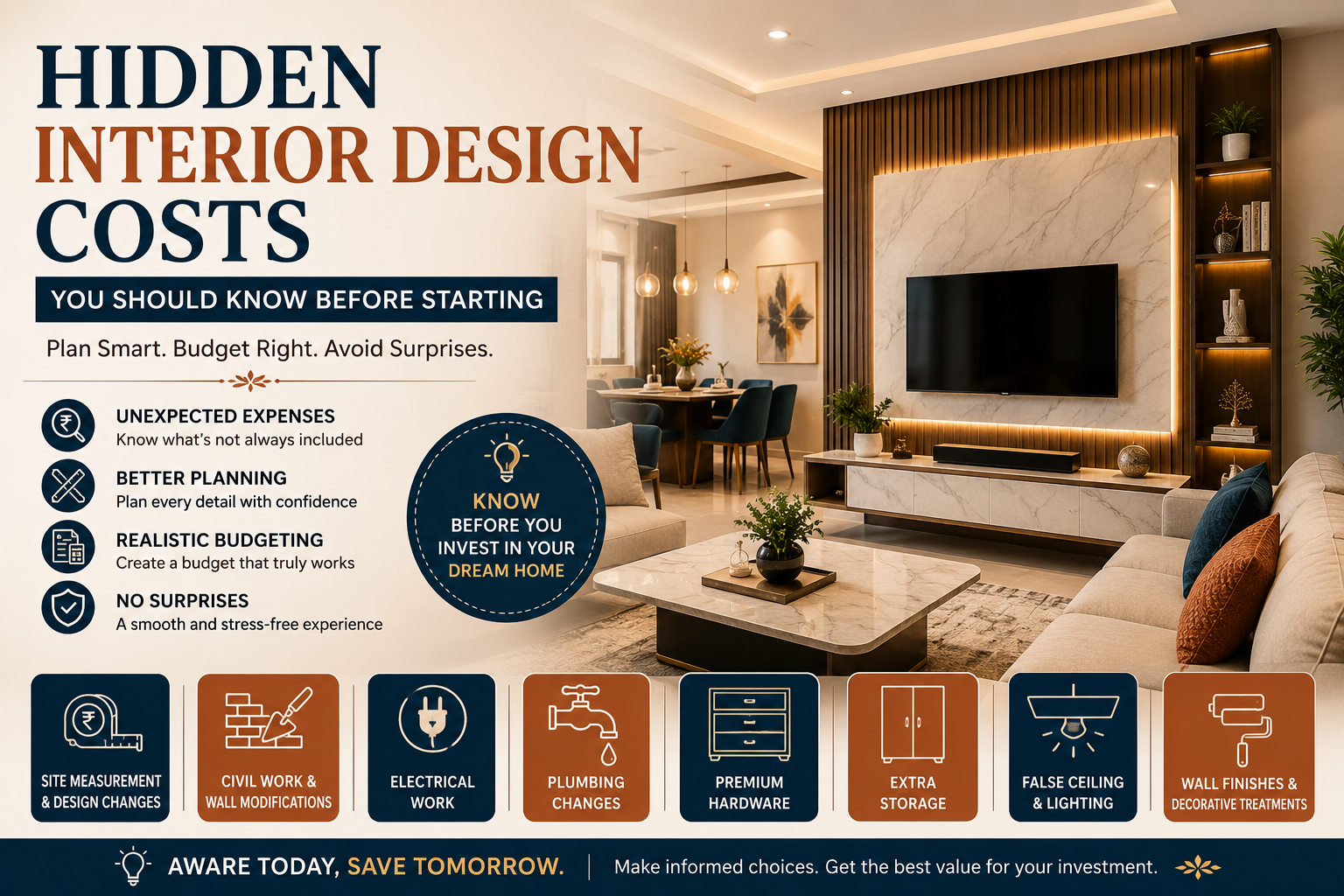
    Hidden Interior Design Costs Homeowners Should Know Before Starting

    Planning a home interior project is exciting. You start imagining a beautiful living room, a stylish kitchen, comfortable bedrooms, elegant lighting, and furniture that fits perfectly. However, once the project begins, homeowners sometimes discover costs that weren’t obvious in the initial budget.

    These unexpected expenses don’t necessarily mean your interior designer is overcharging you. Often, they come from changes in requirements, site conditions, additional work, upgrades, or items that weren’t included in the original quotation.

    Therefore, understanding hidden interior design costs before starting your project can help you create a realistic budget and avoid unpleasant surprises.

    Whether you’re designing a 2BHK apartment, 3BHK home, villa, or premium residence, here’s what you should look out for.

    1. Site Measurement and Design Changes

    The first quotation may be based on initial measurements or an early discussion.

    However, once the designer takes detailed measurements, the actual requirements may change.

    For example:

    • A wall may have an unexpected column.
    • Electrical points may need relocation.
    • A window may affect cabinet placement.
    • Plumbing positions may limit the kitchen layout.
    • Uneven walls may require additional work.

    As a result, the final design may cost more than the initial estimate.

    Tip: Ask whether site measurement, design development, and revisions are included in your package.

    2. Civil Work and Wall Modifications

    Interior design isn’t limited to furniture and décor.

    Depending on the project, you may need additional civil work such as:

    • Wall demolition
    • New partitions
    • Flooring changes
    • Plastering
    • False walls
    • Ceiling modifications
    • Tile replacement
    • Door modifications

    These costs can add up quickly.

    Therefore, before approving the design, ask your designer to identify all expected civil work and include it in the estimate wherever possible.

    3. Electrical Work

    Electrical modifications are another commonly overlooked expense.

    Your original home may not have electrical points where your new furniture requires them.

    You might need additional points for:

    • TV units
    • Bedside lights
    • Pendant lights
    • Decorative lighting
    • Kitchen appliances
    • Study desks
    • Smart devices
    • Charging points

    Furthermore, premium lighting designs may require additional wiring, drivers, switches, dimmers, or control systems.

    So, don’t budget only for the light fixtures. Consider the complete electrical installation.

    4. Plumbing Changes in the Kitchen

    A new modular kitchen may look perfect in a 3D design, but the actual site conditions can affect the final cost.

    If you change the location of:

    • Sink
    • Dishwasher
    • Water purifier
    • Washing machine
    • Drainage points

    you may need additional plumbing work.

    This is particularly important when you’re changing the kitchen layout significantly.

    Before finalizing the design, ask whether the quotation includes plumbing modifications or only the kitchen cabinets.

    5. Premium Hardware

    Cabinet prices don’t always include premium hardware.

    For example, upgrading from basic storage to:

    • Soft-close drawers
    • Tandem boxes
    • Corner mechanisms
    • Tall pantry units
    • Lift-up shutters
    • Magic corners
    • Pull-out baskets

    can increase the overall kitchen budget.

    These features can certainly improve convenience. However, you should understand their cost before selecting them.

    A good approach is to prioritize the hardware you will use most frequently.

    6. Extra Storage

    Storage is one of the biggest areas where budgets can increase.

    Initially, you might plan a simple wardrobe. Later, you may decide to add:

    • Loft storage
    • Full-height wardrobes
    • Shoe cabinets
    • Display units
    • Study storage
    • Crockery cabinets
    • Utility cabinets
    • Hidden storage

    Each addition uses more material, hardware, and labour.

    Therefore, decide your storage requirements early instead of adding cabinets one by one during execution.

    7. False Ceiling and Lighting

    A simple ceiling design and an elaborate ceiling design can have very different costs.

    Your budget may increase because of:

    • Additional gypsum work
    • Cove lighting
    • Spotlights
    • Profile lights
    • Pendant fixtures
    • Decorative fixtures
    • Electrical wiring
    • Special finishes

    Moreover, premium lighting fixtures can significantly affect the final budget.

    Instead of selecting lights only for their appearance, think about where you actually need ambient, task, and accent lighting.

    8. Wall Finishes and Decorative Treatments

    Paint may be included in your basic interior budget, while decorative finishes may cost extra.

    These can include:

    • Wallpaper
    • Veneer panels
    • Fluted panels
    • Textured paint
    • Decorative mouldings
    • Wall panelling
    • Stone finishes
    • Designer laminates

    A single feature wall may not seem expensive initially. However, multiple feature walls across several rooms can substantially increase the project cost.

    So, use statement finishes strategically.

    9. Flooring Upgrades

    If you’re satisfied with your existing flooring, you may not need to replace it.

    However, homeowners sometimes decide to upgrade flooring after seeing the proposed interior design.

    Possible additional expenses include:

    • New tiles
    • Wooden flooring
    • Vinyl flooring
    • Stone
    • Tile removal
    • Surface preparation
    • Installation
    • Skirting

    Therefore, decide early whether flooring forms part of your renovation.

    10. Doors, Handles and Accessories

    Small details can quietly increase your interior budget.

    For example:

    • Designer door handles
    • Soft-close door systems
    • New internal doors
    • Main-door upgrades
    • Door cladding
    • Locks
    • Hardware
    • Mirrors
    • Curtain rods

    Each individual item may seem inexpensive. However, several small upgrades together can create a noticeable difference in your final bill.

    11. Appliances Are Often Separate

    A modular kitchen quotation may cover the cabinets but not necessarily the appliances.

    You may still need to purchase:

    • Hob
    • Chimney
    • Oven
    • Microwave
    • Refrigerator
    • Dishwasher
    • Water purifier

    Similarly, bedroom or living room designs may include provisions for appliances without including the appliances themselves.

    Always ask:

    “Which products are included in this quotation, and which do I need to purchase separately?”

    This simple question can prevent confusion later.

    12. Curtains and Blinds

    Window treatments are another cost homeowners sometimes forget.

    Depending on the design, you may need:

    • Curtains
    • Blinds
    • Curtain rods
    • Tracks
    • Motorized systems
    • Blackout curtains
    • Sheer curtains

    Large villas and homes with multiple windows can have particularly high window-treatment costs.

    Therefore, include them in your overall interior budget if you want a complete finished look.

    13. Furniture Beyond the Basic Package

    Some interior packages include only built-in furniture.

    However, your completed home may also require loose furniture such as:

    • Sofa
    • Dining table
    • Dining chairs
    • Coffee table
    • Side tables
    • Accent chairs
    • Beds
    • Study chairs

    If these aren’t part of your interior package, you’ll need to budget for them separately.

    14. Décor and Styling

    A room can look very different once styling is complete.

    You may want:

    • Artwork
    • Mirrors
    • Rugs
    • Cushions
    • Vases
    • Plants
    • Decorative lighting
    • Accessories
    • Curtains

    These aren’t always included in an interior design quotation.

    Therefore, if you’re aiming for a fully styled home, create a separate décor budget.

    15. Delivery and Transportation

    Depending on the location and project arrangement, transportation may be charged separately.

    This can include:

    • Material transportation
    • Furniture delivery
    • Multiple deliveries
    • Loading and unloading
    • Difficult site access
    • Long-distance transportation

    Ask your designer whether delivery and transportation are already included.

    16. Installation and Labour Charges

    Never assume that manufacturing automatically includes installation.

    Ask whether the quotation covers:

    • Furniture installation
    • Electrical installation
    • Light installation
    • Hardware installation
    • Curtain installation
    • Wall panel installation
    • Final adjustments

    A detailed quotation should make these charges clear.

    17. Apartment Society Charges

    If you’re renovating an apartment, your building management may have specific rules.

    Depending on the society, you may encounter charges related to:

    • Renovation permissions
    • Material movement
    • Lift usage
    • Working hours
    • Debris removal
    • Security deposits
    • Parking or loading arrangements

    These charges vary from one apartment community to another.

    Therefore, check with your association before starting major interior work.

    18. Debris Removal and Disposal

    Renovation creates waste.

    Old cabinets, tiles, flooring, packaging materials, and construction debris may need to be removed from the property.

    Sometimes debris removal is included in the project.

    Sometimes it isn’t.

    Ask about this before work begins.

    Otherwise, you may discover an unexpected expense toward the end of the project.

    19. GST and Other Taxes

    Always check whether your quotation includes applicable taxes.

    A quote that initially looks affordable may become significantly higher once taxes are added.

    Therefore, look for a clear breakdown:

    Base Cost + Applicable Taxes = Final Project Cost

    Don’t hesitate to ask your designer to explain the final payable amount.

    20. Design Upgrades During the Project

    This is perhaps one of the most common reasons budgets increase.

    Once work begins, you may see the actual materials and start thinking:

    “Maybe I should upgrade this.”

    Then one upgrade becomes another.

    For example:

    • Better laminate
    • Premium handles
    • More storage
    • Higher-quality lighting
    • Designer wallpaper
    • Upgraded countertop
    • Additional furniture

    None of these decisions may seem significant individually. However, together they can push the budget considerably higher.

    The solution?

    Set an upgrade budget before the project starts.

    That way, you can enjoy some flexibility without losing control of your finances.

    How to Avoid Unexpected Interior Design Costs

    The good news is that most budget surprises can be reduced with proper planning.

    1. Get a Detailed Quotation

    Ask for an itemized quotation instead of a single lump-sum figure.

    2. Clarify What’s Included

    Understand exactly what the package covers.

    3. Discuss Materials Early

    Confirm the material, finish, thickness, hardware, and brand/specification wherever relevant.

    4. Freeze the Design Before Production

    Frequent changes after manufacturing begins can increase costs and delay the project.

    5. Keep a Contingency Budget

    Even with careful planning, unexpected site conditions can occur.

    Keeping around 10–15% of your planned budget as a contingency can provide a useful financial cushion, depending on the scope and condition of the property.

    6. Ask About Additional Charges

    Discuss transportation, installation, civil work, electrical work, plumbing, taxes, and debris removal upfront.

    Questions to Ask Your Interior Designer Before Signing

    Before finalizing your project, ask these questions:

    Is the quotation itemized?

    Are taxes included?

    Is installation included?

    Are civil, electrical, and plumbing works included?

    Which hardware specifications are included?

    Are appliances included?

    Are curtains and décor included?

    Are transportation and delivery included?

    What happens if I change the design after approval?

    What warranty do you provide?

    Is there an additional charge for modifications during execution?

    Getting clear answers to these questions can make the entire project more transparent.

    How LUNORA Space Designs Approaches Interior Projects

    At LUNORA Space Designs, thoughtful planning starts before execution. The design process focuses on understanding the client’s requirements, studying the available space, developing the concept, refining material selections, and preparing the project for execution.

    For homeowners planning interiors in Hyderabad, this structured approach can make it easier to understand the scope of work and make informed decisions about materials, finishes, furniture, lighting, and storage.

    Whether you’re planning a 2BHK apartment, 3BHK home, villa, modular kitchen, or custom furniture, discussing the complete scope early can help you manage expectations and budget more effectively.

    Final Thoughts

    Interior design is a significant investment, so knowing the potential hidden costs before you begin can save you both money and stress.

    The biggest lesson is simple: don’t judge an interior design quotation by its headline price alone.

    Look at what the quotation includes, what it excludes, which materials and hardware it specifies, and what additional work your home may require.

    Most importantly, communicate openly with your designer.

    When you establish a realistic budget, finalize the scope carefully, leave room for unexpected site requirements, and avoid unnecessary last-minute upgrades, your interior project becomes much easier to manage.

    A well-planned interior isn’t just about creating a beautiful home. It’s also about creating a clear plan for how that home will come together—without unpleasant financial surprises along the way.

  • Top Custom Furniture Trends for Modern Homes in Hyderabad

    Top Custom Furniture Trends for Modern Homes in Hyderabad

    Modern homes are becoming more personal. Instead of simply buying furniture from a showroom and arranging it around the room, many homeowners now want pieces that fit their lifestyle, available space, and overall interior design.

    That is where custom furniture makes a real difference.

    For homeowners in Hyderabad, this approach is especially useful. Apartments often need clever space-saving solutions, while villas offer larger areas that benefit from furniture designed to match their proportions. At the same time, current interiors are moving toward warmer colours, natural materials, curved forms, multifunctional pieces, and more personalized details.

    If you’re planning a new home interior or renovating an existing one, here are some of the top custom furniture trends in Hyderabad worth considering.

    1. Warm Wood Finishes Are Making a Comeback

    For years, extremely light or cool-toned furniture dominated modern interiors. Now, warmer wood finishes are creating a more inviting look.

    Walnut, natural oak-inspired tones, teak-like finishes, and rich brown shades can add warmth without making a room feel traditional.

    These finishes work beautifully for:

    • TV units
    • Wardrobes
    • Bed back panels
    • Study units
    • Dining furniture
    • Wall panelling
    • Storage cabinets

    Current 2026 design coverage also points toward darker woods such as walnut and espresso tones, particularly when paired with stone and neutral finishes.

    For a Hyderabad home, you don’t need to use dark wood everywhere. Instead, combine it with ivory, beige, cream, or soft grey to create a balanced contemporary interior.

    2. Curved Furniture Is Bringing Softer Shapes Indoors

    Straight lines still have their place, but curves are becoming increasingly popular in modern interiors.

    Rounded sofas, curved consoles, arched headboards, oval coffee tables, and softly shaped cabinets can make a room feel more relaxed.

    This trend works particularly well in open-plan living rooms because curved furniture can soften the strong architectural lines of the space. Hyderabad design studios are also highlighting curve-forward furniture as a significant 2026 direction.

    However, you don’t need to make every piece curved.

    A single curved sofa or statement console can be enough to introduce the trend without making the interior feel overly themed.

    3. Multifunctional Furniture Is Ideal for Apartments

    As urban apartments become more compact, furniture needs to do more than one job.

    Custom furniture can combine multiple functions within a single unit.

    For example:

    • A TV unit can include hidden storage and display shelves.
    • A bed can include hydraulic storage.
    • A study desk can be integrated into a wardrobe.
    • A window seat can double as storage.
    • A dining bench can include drawers.
    • A wall unit can combine a work desk and bookshelf.

    This approach keeps the floor more open while giving homeowners more functionality.

    In fact, multifunctional furniture continues to be a major direction for compact Indian homes.

    4. Floor-to-Ceiling Storage Is Becoming More Popular

    If you have limited floor space, look upward.

    Floor-to-ceiling furniture can make excellent use of vertical space while creating a cleaner appearance.

    Popular applications include:

    • Full-height wardrobes
    • Tall kitchen cabinets
    • Floor-to-ceiling TV units
    • Built-in bookshelves
    • Display walls
    • Entrance storage

    Instead of having several separate cabinets at different heights, one continuous unit can create a more streamlined appearance.

    Moreover, the extra storage can help keep everyday clutter out of sight.

    5. Fluted Furniture Adds Texture

    Fluted panels have become a popular feature in modern interiors because they add texture without requiring elaborate decoration.

    You can incorporate fluted detailing into:

    • TV units
    • Wardrobe shutters
    • Headboards
    • Room dividers
    • Bar cabinets
    • Entrance consoles
    • Kitchen islands

    The vertical lines can also create a sense of height.

    However, moderation matters. Using fluting on every wall and furniture piece can quickly make the design feel repetitive. Instead, choose one or two areas where the texture can become a visual feature.

    6. Hidden Storage Is Taking Centre Stage

    Modern homeowners want their homes to look clean, but they still need plenty of storage.

    As a result, concealed storage has become an important part of custom furniture design.

    For example, a sophisticated TV wall might appear minimal from the outside while hiding:

    • Gaming consoles
    • Wi-Fi equipment
    • Documents
    • Books
    • Chargers
    • Everyday household items

    Likewise, a bedroom wardrobe can conceal extensive storage behind streamlined shutters.

    The result is a home that feels less cluttered without sacrificing practicality.

    7. Integrated Lighting Makes Furniture More Sophisticated

    Furniture is no longer just about wood, panels, shelves, and drawers.

    Lighting is increasingly becoming part of the furniture itself.

    LED lighting can be integrated into:

    • Display shelves
    • Wardrobes
    • Headboards
    • TV units
    • Kitchen cabinets
    • Bookshelves
    • Bar units

    Soft lighting can highlight textures and create a warmer atmosphere in the evening.

    For example, a floating TV unit with concealed lighting underneath can create a subtle architectural effect without adding unnecessary decoration.

    8. Natural Materials Are Creating Warmer Interiors

    Modern design doesn’t have to feel cold.

    Natural materials and organic textures are increasingly being used to make contemporary homes feel more comfortable and connected to nature.

    Depending on the design, homeowners can introduce:

    • Wood
    • Cane
    • Rattan
    • Natural stone
    • Linen
    • Jute
    • Handcrafted elements

    Hyderabad’s 2026 interior trends also show growing interest in natural materials, sustainability, artisanal details, and biophilic design.

    The trick is to combine these materials with clean modern forms rather than creating an overly rustic look.

    9. Bespoke Home Offices Are Becoming Essential

    Working from home has changed how homeowners think about furniture.

    A dining table isn’t always the best place for a laptop and documents.

    Instead, custom study units can be designed around the available space.

    A compact workstation can include:

    • Desk space
    • Shelves
    • Closed storage
    • Cable management
    • Charging points
    • Task lighting
    • Display areas

    If you have a small apartment, the desk can even be integrated into a wardrobe or living-room storage unit.

    That way, the workspace can remain functional without taking over the room.

    10. Custom TV Units Are Becoming More Architectural

    The TV wall has evolved considerably.

    Instead of simply placing a television on a cabinet, homeowners are creating complete feature walls that combine technology with interior design.

    A custom TV unit can incorporate:

    • Wooden panels
    • Stone finishes
    • Fluted details
    • Floating cabinets
    • Display shelves
    • Concealed wiring
    • LED lighting
    • Decorative niches

    This creates a stronger visual focal point while providing practical storage.

    11. Statement Headboards Are Transforming Bedrooms

    The bed is naturally the focal point of most bedrooms, so a custom headboard can completely change the atmosphere.

    Popular options include:

    • Upholstered headboards
    • Full-wall headboards
    • Wooden panel designs
    • Fluted headboards
    • Integrated bedside tables
    • Backlit panels

    You can also coordinate the headboard with the wardrobe and dressing unit to create a cohesive bedroom design.

    12. Custom Modular Kitchens Are Getting Smarter

    The modern kitchen is expected to look elegant while working efficiently.

    Therefore, homeowners are increasingly looking for customized kitchen storage rather than simply choosing standard cabinets.

    Useful features include:

    • Tall pantry units
    • Pull-out baskets
    • Corner storage
    • Appliance garages
    • Built-in appliances
    • Cutlery organizers
    • Deep drawers
    • Under-cabinet lighting

    A custom kitchen can also be designed around the homeowner’s cooking habits.

    Someone who cooks frequently may need more countertop and cookware storage, while another homeowner may prioritize appliance integration and minimal visual clutter.

    13. Mixed Materials Are Replacing Matching Furniture Sets

    Modern interiors don’t necessarily need every furniture piece to match perfectly.

    Instead, designers are combining different materials and textures to create depth.

    For example:

    Walnut + beige upholstery + brushed metal

    or

    Wood + stone + fluted glass

    or

    Matte finishes + natural textures + warm lighting

    This creates a more sophisticated appearance than using the same finish throughout the entire home.

    Current design coverage also highlights material contrast and personalized combinations as part of the move away from overly uniform interiors.

    14. Custom Furniture With Smart Technology

    Technology is becoming more integrated into modern homes.

    Instead of allowing devices and wires to dominate the interior, custom furniture can hide or integrate them.

    For example:

    • Concealed charging points
    • Cable management
    • Motorized storage
    • Integrated lighting controls
    • Hidden speakers
    • Smart switches
    • TV and entertainment storage

    This allows technology to become part of the home without distracting from the design.

    Smart-home integration is also being identified as a growing component of Hyderabad’s contemporary interior design direction.

    15. Minimalist Furniture With Maximum Functionality

    Minimalism is evolving.

    Instead of extremely plain, empty interiors, homeowners are increasingly choosing warm minimalism—clean lines combined with natural textures, comfortable materials, and thoughtful details.

    Custom furniture works particularly well with this approach.

    For example, a simple wardrobe can hide an extensive internal storage system. A clean TV unit can conceal electronics. A sleek kitchen can contain numerous drawers and organizers.

    In other words, the function is there, but the clutter isn’t visible.

    16. Furniture Designed Around the Homeowner

    Perhaps the biggest custom furniture trend is personalization itself.

    Instead of copying a design from Pinterest or Instagram, homeowners increasingly want furniture that reflects their lifestyle.

    That could mean:

    • A special display unit for collectibles
    • A library for a book lover
    • A custom bar for someone who entertains
    • A dedicated vanity area
    • A pet-friendly storage unit
    • A hobby workstation
    • A meditation corner

    This shift toward personalized interiors is also visible in current Hyderabad design trends.

    How to Choose the Right Custom Furniture Trends for Your Home

    Following trends can be exciting, but you don’t need to use every trend in your home.

    Instead, consider three things.

    1. Your Space

    A curved sofa that works beautifully in a large villa may feel too bulky in a compact apartment.

    2. Your Lifestyle

    If you work from home, prioritize a functional study area. If storage is your biggest concern, invest more in wardrobes and built-in cabinets.

    3. Your Long-Term Style

    Trends change. Therefore, choose timeless materials and use trendier elements as accents.

    For example, you can keep the main furniture in warm wood and neutral finishes while introducing curves, fluting, or statement colours selectively.

    Custom Furniture for Apartments vs Villas

    For Apartments

    Focus on:

    • Multifunctional furniture
    • Vertical storage
    • Floating units
    • Hidden storage
    • Compact workstations
    • Sliding wardrobes
    • Integrated lighting

    For Villas

    You have more freedom to introduce:

    • Larger statement furniture
    • Custom libraries
    • Walk-in wardrobes
    • Home bars
    • Large entertainment walls
    • Bespoke dining furniture
    • Double-height installations

    The important thing is to match the furniture scale to the architecture.

    Why Custom Furniture Is Worth Considering

    Custom furniture isn’t simply about having something unique.

    It can also help you:

    • Use difficult spaces effectively
    • Improve storage
    • Maintain visual consistency
    • Match furniture to room dimensions
    • Integrate lighting
    • Hide technology
    • Create a more personalized interior

    However, quality matters. Good materials, accurate measurements, reliable hardware, skilled craftsmanship, and proper installation all contribute to the final result.

    Custom Furniture by LUNORA Space Designs

    At LUNORA Space Designs, custom furniture is one of our focused interior design services.

    We create bespoke pieces that combine perfect fit, premium materials, thoughtful storage, and refined aesthetics. Rather than treating furniture as a separate purchase, we coordinate it with the home’s overall space planning, lighting, finishes, and design language.

    Whether you’re furnishing a modern apartment in Hyderabad or designing a luxury villa, our aim is to create furniture that looks beautiful and works naturally with your lifestyle.

    Final Thoughts

    The latest custom furniture trends aren’t simply about following what is fashionable.

    Instead, they are moving toward personalization, functionality, warmth, smart storage, natural materials, and timeless design.

    For Hyderabad homeowners, this is particularly valuable because every property has different requirements. A compact apartment may need clever multifunctional furniture, while a spacious villa may benefit from larger bespoke pieces that complement its architecture.

    Ultimately, the best custom furniture is not necessarily the most complicated. It is the furniture that fits your home beautifully, solves real everyday problems, and continues to feel right long after the latest trend has passed.

  • How Bespoke Furniture Enhances Home Interior Design

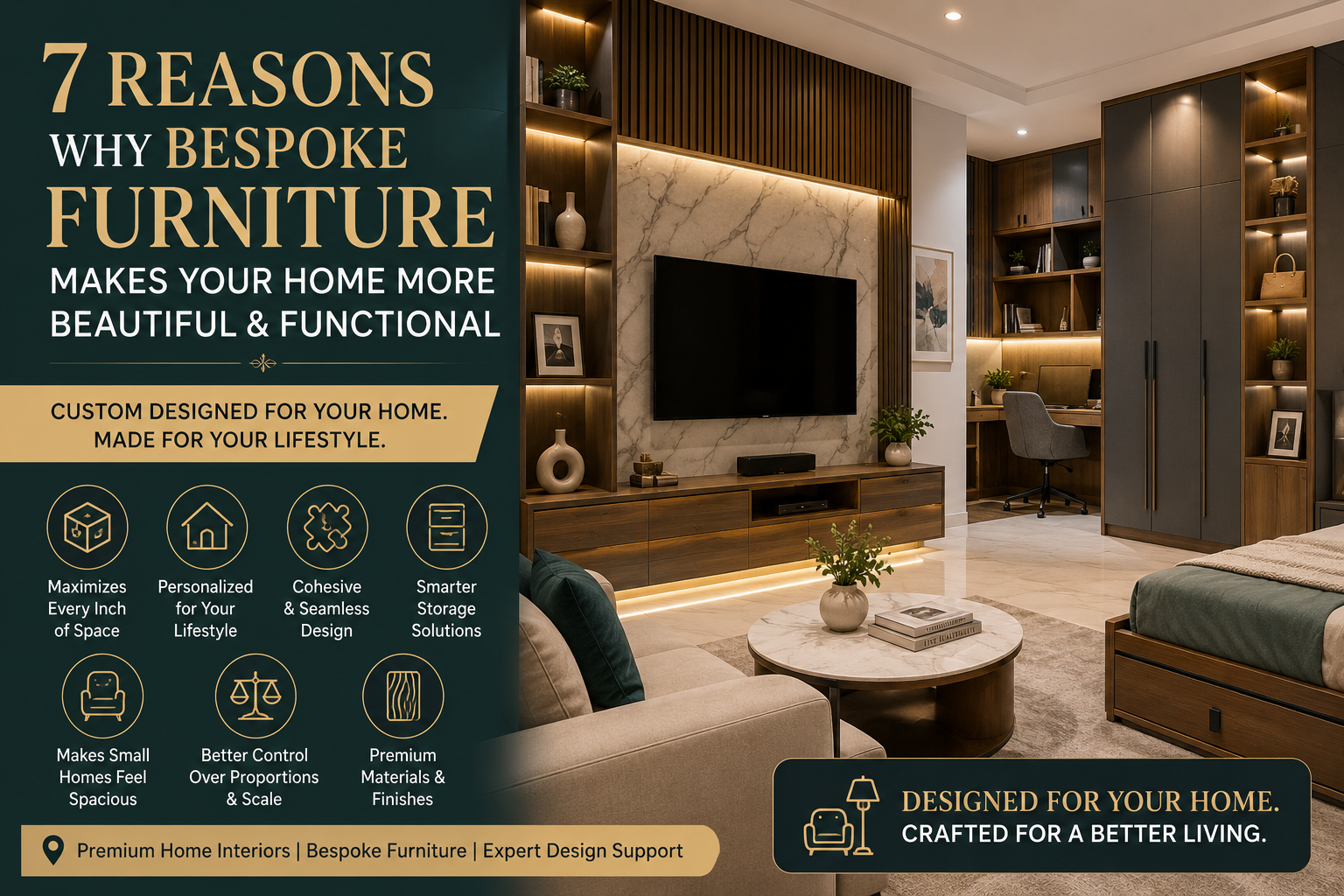
    How Bespoke Furniture Enhances Home Interior Design

    A beautiful home is more than a collection of stylish furniture and expensive finishes. Instead, it is a space where every element feels connected, purposeful, and personal. This is exactly where bespoke furniture can make a noticeable difference.

    Unlike mass-produced furniture, bespoke pieces are designed around your home, lifestyle, and preferences. As a result, they can fit unusual spaces, provide smarter storage, complement your interior theme, and add a distinctive character to every room.

    For homeowners planning premium interiors, especially those looking for custom furniture in Hyderabad, bespoke furniture offers an opportunity to create a home that feels genuinely unique.

    What Is Bespoke Furniture?

    Bespoke furniture refers to furniture that is specially designed and made according to a client’s specific requirements.

    Instead of choosing from fixed sizes and standard designs, you can decide on details such as:

    • Dimensions
    • Materials
    • Colours
    • Finishes
    • Storage configuration
    • Hardware
    • Shapes
    • Textures
    • Lighting integration

    For example, rather than purchasing a standard wardrobe, you can create one that fits your bedroom wall perfectly and includes dedicated spaces for clothes, shoes, accessories, and luggage.

    Therefore, bespoke furniture combines personal style with practical functionality.

    1. Bespoke Furniture Creates a Personalized Home

    Your home should reflect your personality rather than look like a showroom.

    With bespoke furniture, you can choose designs that match your taste and lifestyle. Whether you prefer modern minimalism, warm contemporary interiors, classic elegance, or a more luxurious aesthetic, you can tailor the furniture accordingly.

    For instance, a custom console in the entrance can reflect the home’s overall design language. Similarly, a custom headboard can become the focal point of a bedroom.

    As a result, the interior feels more personal and memorable.

    2. It Makes Better Use of Available Space

    Every home has its own dimensions and architectural characteristics. Consequently, standard furniture doesn’t always fit perfectly.

    You may have:

    • An unusually wide wall
    • A narrow passage
    • An awkward corner
    • A structural column
    • A recessed niche
    • A sloping wall
    • Limited floor space

    Instead of leaving these areas unused, bespoke furniture can work around them.

    For example, a custom storage unit can fit precisely between two walls. Likewise, a built-in study desk can transform an unused corner into a productive workspace.

    This approach helps you use more of your home without making it feel crowded.

    3. Bespoke Furniture Improves Storage

    Storage plays a major role in how organized a home feels.

    However, ready-made furniture often comes with fixed shelves, drawers, and compartments. These may not match your actual storage needs.

    Bespoke furniture gives you much greater control.

    A custom wardrobe, for example, can include separate sections for:

    • Hanging clothes
    • Folded clothing
    • Shoes
    • Handbags
    • Accessories
    • Jewellery
    • Luggage

    Similarly, a custom TV unit can combine open display shelves with concealed cabinets.

    Therefore, you get storage that works around your belongings rather than forcing your belongings into a standard configuration.

    4. It Creates a Cohesive Interior

    A well-designed home usually has a sense of visual continuity.

    If every furniture piece has a different colour, finish, and style, the interior can feel disconnected. On the other hand, bespoke furniture allows you to coordinate different elements.

    For example, you can repeat a walnut finish across the living room TV unit, bedroom wardrobe, and study area. You can also use similar hardware or design details throughout the home.

    As a result, the rooms feel connected without looking identical.

    5. It Enhances Luxury Interiors

    Luxury doesn’t always mean adding more decoration.

    Instead, luxury often comes from proportion, craftsmanship, materials, and attention to detail.

    Bespoke furniture can introduce all of these elements.

    A carefully designed console, wardrobe, kitchen cabinet, or entertainment unit can use premium finishes and refined detailing to elevate the overall interior.

    Furthermore, integrated lighting, concealed hardware, fluted panels, veneers, glass, and carefully selected textures can add depth without overwhelming the space.

    6. It Allows You to Choose the Right Materials

    Material selection has a major impact on the character of an interior.

    With bespoke furniture, you have greater freedom to select finishes that complement your flooring, walls, lighting, and other architectural elements.

    Depending on the design, you may consider:

    • Wood finishes
    • Veneers
    • Laminates
    • Glass
    • Stone
    • Metal accents
    • Fluted panels
    • Premium hardware

    For example, warm wood tones can make a contemporary home feel more inviting, while matte finishes can create a clean and sophisticated appearance.

    Therefore, furniture becomes part of the overall interior design instead of looking like a separate addition.

    7. It Can Turn Awkward Areas Into Useful Spaces

    Some of the most interesting furniture solutions come from challenging spaces.

    An unused corner can become a reading nook. A space beneath the staircase can become storage. A narrow wall can accommodate a compact study unit.

    Similarly, an empty passage can become a display area with a slim console and integrated lighting.

    Instead of seeing awkward areas as problems, bespoke furniture allows you to turn them into design opportunities.

    8. Bespoke Furniture Supports Better Space Planning

    Furniture and space planning work closely together.

    If you choose furniture after completing the layout, you may have to compromise on either functionality or appearance. However, when designers plan furniture alongside the layout, they can coordinate everything more effectively.

    They can consider:

    • Walking paths
    • Door openings
    • Window positions
    • Storage requirements
    • Electrical points
    • Lighting
    • Furniture dimensions

    Consequently, the final interior feels more comfortable and balanced.

    This is especially useful for apartment interiors where every square foot matters.

    9. It Can Integrate Lighting Seamlessly

    Lighting can transform the appearance of furniture.

    Bespoke units can incorporate concealed LED lighting into:

    • TV units
    • Display shelves
    • Wardrobes
    • Headboards
    • Bookshelves
    • Kitchen cabinets
    • Bar units

    For example, soft lighting inside a display shelf can highlight artwork or décor. Similarly, under-cabinet lighting can improve visibility while adding warmth to the kitchen.

    Because the lighting is considered during the design stage, the installation can remain clean and discreet.

    10. It Makes Kitchens More Functional

    The kitchen is one of the areas where customized design can make a particularly noticeable difference.

    A bespoke kitchen can be planned around the way you cook and use appliances.

    For example, you can create dedicated spaces for:

    • Large appliances
    • Cookware
    • Groceries
    • Cutlery
    • Spices
    • Cleaning supplies
    • Small appliances

    Furthermore, drawers, pull-outs, corner storage, and tall cabinets can help you use difficult areas more efficiently.

    Therefore, a kitchen can look sophisticated while remaining highly practical.

    11. It Creates Better Bedrooms

    The bedroom should feel calm, comfortable, and uncluttered.

    However, wardrobes, beds, dressing units, side tables, and storage can quickly consume floor space.

    Bespoke furniture helps solve this problem.

    For example, you could combine a custom bed with:

    • Integrated bedside tables
    • Hidden storage
    • A statement headboard
    • Wardrobe storage
    • Dressing space

    As a result, the room can maintain a clean appearance while providing everything you need.

    12. It Works Well in Luxury Villas

    Villas often have larger rooms, unusual architectural features, and more generous wall dimensions.

    Standard furniture can sometimes look too small in these spaces.

    Bespoke furniture allows designers to create pieces that match the scale of the room.

    A large custom entertainment wall, statement console, built-in library, or bespoke dining unit can help balance the proportions of a spacious villa.

    At the same time, designers can maintain comfortable circulation so the room doesn’t feel overloaded.

    13. It Adds Character to Apartments

    Apartments benefit from bespoke furniture for a different reason: efficient space utilization.

    A compact apartment may need one piece of furniture to perform several functions.

    For example, a custom TV unit can combine:

    • Television space
    • Display shelves
    • Closed storage
    • Bookshelves
    • Decorative lighting

    Similarly, a window-side study can provide a workspace without taking up an entire room.

    Thus, bespoke furniture allows smaller homes to feel both practical and stylish.

    14. It Supports Your Lifestyle

    Every family uses its home differently.

    Some homeowners work from home. Others entertain guests frequently. Some need extensive storage, while others prefer minimal furniture.

    Bespoke furniture lets the design respond to these differences.

    If you work from home, for example, a custom workstation can include cable management, storage, shelves, and integrated lighting.

    If you enjoy entertaining, you could add a custom bar cabinet or serving unit.

    Therefore, furniture becomes an extension of your lifestyle.

    15. It Reduces Visual Clutter

    A home can feel messy even when it is relatively clean if too many objects remain visible.

    Bespoke storage can help hide everyday items behind clean, coordinated surfaces.

    For example:

    • Closed TV cabinets can hide electronics.
    • Full-height wardrobes can reduce visual clutter.
    • Built-in shoe cabinets can organize footwear.
    • Custom kitchen storage can hide appliances.
    • Concealed workstations can keep work materials out of sight.

    Consequently, the interior can maintain a cleaner and more sophisticated appearance.

    16. It Gives You More Control Over Proportion

    Proportion strongly influences how luxurious an interior feels.

    A tiny console can look lost against a large wall. On the other hand, an oversized cabinet can overwhelm a small room.

    Bespoke furniture allows designers to create pieces that suit the scale of the architecture.

    For example, a long living room wall may benefit from a carefully proportioned entertainment unit. Meanwhile, a compact bedroom may need a slimmer wardrobe with full-height storage.

    This attention to proportion can make the entire room feel more balanced.

    17. It Helps Create Timeless Interiors

    Trends can be useful for inspiration, but they can also become outdated.

    Bespoke furniture gives you the opportunity to focus on timeless elements such as:

    • Clean proportions
    • Quality materials
    • Neutral finishes
    • Functional layouts
    • Simple detailing
    • Durable hardware

    You can still introduce current trends through accessories, artwork, lighting, or soft furnishings.

    This makes it easier to refresh the interior later without replacing major furniture pieces.

    18. It Can Become a Statement Feature

    Not every piece of furniture needs to blend into the background.

    Sometimes, one carefully designed piece can become the highlight of the room.

    For example:

    • A sculptural entrance console
    • A luxurious bedroom headboard
    • A dramatic TV wall
    • A custom bar cabinet
    • A handcrafted dining table
    • A statement bookshelf

    Because the piece is designed specifically for the home, it can create a stronger connection between the furniture and the architecture.

    Custom Furniture vs Bespoke Furniture

    The terms custom furniture and bespoke furniture are often used interchangeably. Both involve tailoring furniture to specific requirements.

    However, bespoke furniture generally suggests a higher level of personalization and attention to individual design details.

    In either case, the key advantage remains the same: the furniture is created around your space and requirements rather than being limited to standard sizes.

    Is Bespoke Furniture Worth the Investment?

    Bespoke furniture can require a larger initial investment than many ready-made alternatives. However, the value comes from more than the furniture itself.

    You are investing in:

    • Better space utilization
    • Personalized design
    • Improved storage
    • Material selection
    • Visual consistency
    • Functionality
    • Long-term usability

    Therefore, the right question isn’t simply, “Is bespoke furniture expensive?”

    Instead, ask:

    “Will this furniture solve my home’s specific requirements better than a standard piece?”

    If the answer is yes, bespoke furniture can be a worthwhile investment.

    How LUNORA Space Designs Approaches Bespoke Furniture

    At LUNORA Space Designs, we believe furniture should be an integral part of the interior rather than an afterthought.

    Our design approach begins by understanding your space, lifestyle, aesthetic preferences, and practical requirements. Then, we develop furniture solutions that complement the overall design.

    Our custom furniture solutions focus on:

    • Bespoke design
    • Premium materials
    • Perfect fit
    • Smart storage
    • Functional layouts
    • Refined finishes
    • Long-term usability

    Whether you’re designing an apartment, villa, or commercial space in Hyderabad, we aim to create interiors that feel sophisticated without losing their everyday practicality.

    Final Thoughts

    Bespoke furniture can completely change the way a home looks and functions.

    It allows you to use difficult spaces more effectively, improve storage, coordinate materials, create personalized designs, and maintain a consistent aesthetic throughout the home.

    Most importantly, it allows your furniture to work for you.

    Instead of adapting your lifestyle to standard furniture, you can create furniture around the way you actually live.

    When thoughtful space planning, quality materials, skilled craftsmanship, and refined design come together, bespoke furniture becomes more than a functional necessity. It becomes part of the identity of your home.

    If you’re planning a premium home interior in Hyderabad, carefully designed bespoke furniture can help you create a space that feels elegant, organized, comfortable, and uniquely yours.